2026-08-04T13:13:50.262Z ·
Dental Implant Side Effects, Risks and Complications
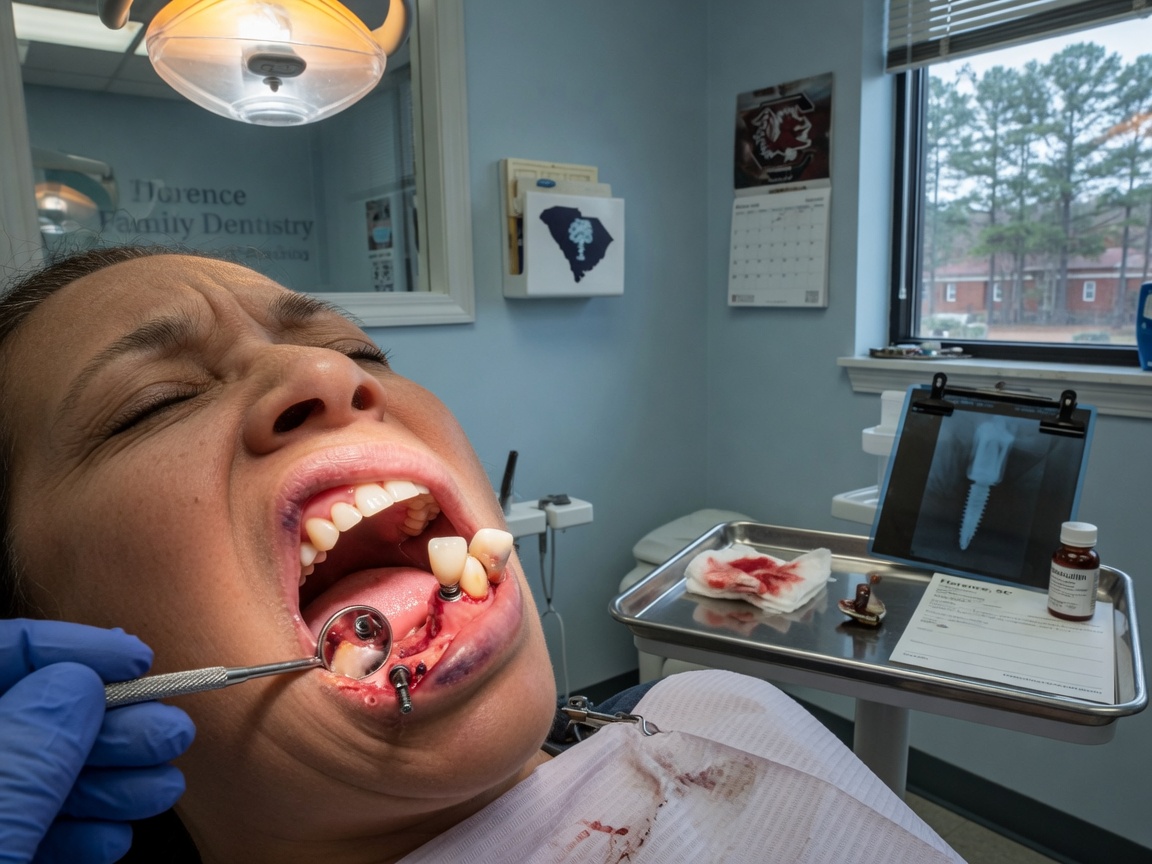
The main risks of dental implants are infection at the surgical site, nerve injury causing numbness or tingling in the lip and chin, sinus complications with upper implants, and implant failure where the bone doesn't fuse properly. Success rates are high, generally reported above 95% at ten years for implants placed in healthy patients, and the most common long-term problem is peri-implantitis, an inflammatory condition around the implant driven by plaque.
Normal Recovery vs a Problem
Swelling, bruising, mild bleeding and soreness for several days after placement are expected, not complications. Swelling generally peaks around day two or three then subsides.
What isn't normal: worsening pain after day three or four rather than improving, fever, pus or foul taste, persistent bleeding, or numbness that hasn't resolved within a day of the anesthetic wearing off. Any of those warrants a call rather than waiting for a scheduled follow-up.
Nerve Injury
The inferior alveolar nerve runs through the lower jaw and can be injured during placement of lower back implants, causing numbness, tingling or altered sensation in the lip, chin or tongue. Most cases resolve within weeks to months. A small number are permanent.
This risk is why 3D imaging isn't optional. A cone beam CT scan maps exactly where the nerve canal sits so placement depth can be planned around it. Implants placed from a flat 2D X-ray alone carry meaningfully higher risk, and that's a legitimate question to ask a provider.
Sinus Complications
Upper back implants sit close to the maxillary sinus. If an implant perforates the sinus floor, it can cause sinus infection or chronic congestion. This is the specific problem sinus lift surgery exists to prevent, by raising the sinus floor and building bone height before the implant goes in.
When imaging shows insufficient bone height under the sinus and a provider proposes proceeding without a lift, that's worth a second opinion.
Implant Failure
Early failure means the implant never integrates, typically showing up within the first few months as looseness or persistent discomfort. Late failure means an integrated implant loosens years later, usually from bone loss driven by peri-implantitis.
A failed implant is generally removable, with the site allowed to heal and often grafted before a replacement attempt. Failed implant repair covers what that involves. It's more expensive and slower than getting it right initially, which is the practical argument against chasing the cheapest possible quote.
Peri-Implantitis
This is the most common long-term implant problem. Plaque accumulates around the implant, gum tissue inflames, and bone around the implant recedes. Unchecked, it ends in implant loss.
The crown doesn't decay, which leads some patients to relax their hygiene. That's exactly backwards. Implants need the same brushing and flossing as natural teeth plus regular professional cleaning, because the tissue attachment around an implant is weaker than around a natural tooth.
Who Is at Higher Risk
Smoking is the single largest modifiable risk factor, with a well-documented effect on both early failure and peri-implantitis. Uncontrolled diabetes impairs healing. Untreated gum disease should be resolved before implants go in, not after. Head and neck radiation history and certain bone medications require specific planning.
None of these automatically disqualify you. They change how the case is planned and what the realistic success expectation is. Withholding them during consultation is the actual risk.
Putting the Risk in Context
Implants are among the more predictable procedures in dentistry, and the alternative to treating a missing tooth carries its own costs: jawbone resorption at the site, drifting of adjacent teeth, and increasing difficulty of treating the gap later.
Our article on alternatives to dental implants compares those options fairly, including the cases where a bridge or partial denture is genuinely the better call.